 Tiếng Việt
 English
 中文
中文
 日本語
日本語
 한국어
한국어

Son Thanh Co., Ltd
Average response time: 24h
Automotive shock-absorbing rubber
Detailed description
I. Structure of automotive rubber shock absorbers
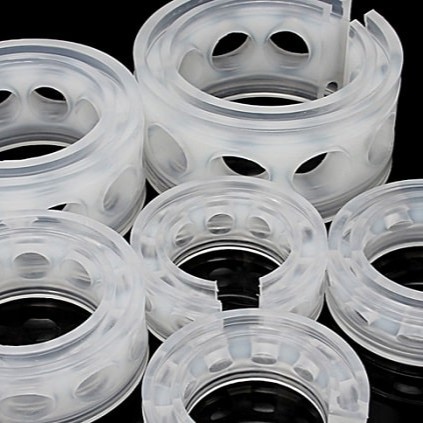
Made from synthetic rubber, these components are circular in shape and typically feature 8 to 9 holes across their surface. They are installed at the vehicle's suspension struts to optimally reduce the impact of forces acting on the car.
The material is highly durable and tough, offering excellent resistance to wear and tear, which enables it to effectively perform its intended function. Since sizes vary depending on the vehicle make and model, you must select a replacement shock absorber that matches the specific dimensions of the one currently on your vehicle.
II. Functions of automotive rubber shock absorbers
The primary function is implied by the name itself: "shock absorption." These components reduce vibration and shaking while the vehicle is in motion, particularly when traversing rough or uneven terrain. Specifically, the benefits include:
1. Maintaining vehicle balance during cornering
This is a particularly impressive feature. When a vehicle corners—especially at high speeds—its center of gravity shifts to one side, creating a risk of rollover. So, how does this rubber component help in such situations?
Thanks to its high elasticity and a design that incorporates force-dispersing holes, the rubber pad absorbs a portion of the compressive force generated during cornering. It then immediately dissipates a significant amount of that force.
This helps maintain the vehicle's center of gravity at the necessary level of balance, thereby ensuring safety when cornering.
2. Enhancing shock absorption capabilities
When a vehicle travels over uneven or bumpy roads, the four wheels do not remain on the same plane. In this situation, the compression force is not evenly distributed.
This is the primary cause of vehicle shaking and bouncing. Passengers will experience significant discomfort, which can even lead to motion sickness.
For vehicles equipped with rubber shock buffers, this issue is mitigated because the imbalance in suspension travel between the four wheels is reduced, thereby improving vehicle stability.
3. Raising the vehicle body height
Automotive shock buffers act much like a spacer. Installing them raises the vehicle body by 1–2 cm. This is particularly beneficial for low-clearance vehicles, as it increases the distance between the undercarriage and the road surface.
Additionally, they help maintain the suspension springs within an optimal compression range, preventing excessive compression that could lead to a loss of elasticity over time.
4. Shock buffers help reduce braking distance
When driving at high speeds and suddenly braking hard, the vehicle's balance is severely compromised. The vehicle's entire weight shifts forward, placing immense compressive force on the front suspension springs.
If the springs compress unevenly or excessively, the vehicle may become unstable. Controlling the vehicle becomes difficult, and it may skid a considerable distance. In such scenarios, shock buffers prove essential.
III. Signs of damage
You can detect damage to the shock buffers through visual inspection. The presence of cracks or deformation indicates that they are damaged and require replacement. They have a relatively long lifespan, though this depends on driving frequency and the condition of the roads you travel on.
Furthermore, given the function of automotive shock-absorbing rubber components, you can infer potential issues if you notice symptoms such as vehicle instability when cornering, poor shock absorption, reduced vehicle ride height, or compromised braking performance.
It is important to detect these issues early and arrange for repairs or replacements; otherwise, suspension components and undercarriage parts could suffer significant damage, leading to high repair costs.
Send inquiry to this company

IPAVIETNAM
Hotline/WhatsApp: +84-83-555-3388
WeChat ID: fdivietnam