 Tiếng Việt
 English
 中文
中文
 日本語
日本語
 한국어
한국어
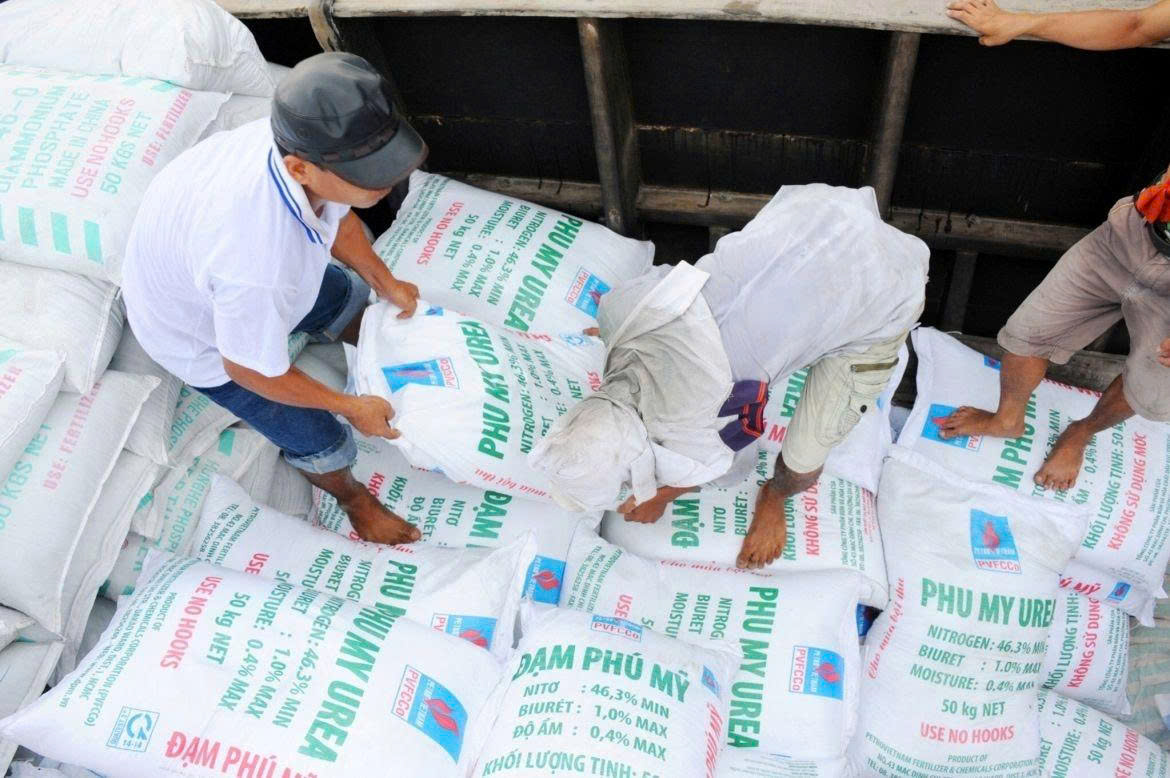
Fertiliser exports surge as prices climb
According to preliminary data from the Customs Department, Vietnam exported more than 1.9 million tonnes of fertilisers of all types from the beginning of the year through August 15, earning nearly US$1.07 billion. Compared with the same period in 2025, export volume increased 38.2%, with export value surging 80.8%.
The export value has already exceeded the full-year figures recorded in both 2024 and 2025.
In the first half of August alone, Vietnam shipped abroad more than 88,500 tonnes of fertilisers worth nearly US$50.9 million. The average export price reached nearly US$542 per tonne, up about 30.8%.
The much faster growth in export value than volume shows that higher export prices have played an important role in driving the increase in export earnings.
The Vietnam Fertiliser Association (FAV) reported that the global fertiliser market has recently been affected by geopolitical developments, energy prices and supply chain disruptions. Prices of urea, DAP and ammonia have risen as supplies in some regions were affected, while demand in major markets has increased.
In terms of individual markets, Cambodia was the largest importer of Vietnamese fertilisers. In the first seven months, Vietnam exported nearly 402,000 tonnes to Cambodia, generating about US$177.4 million. Although the export volume fell 9.5%, the export value still increased 1.75% as the average export price rose.
Meanwhile, exports to the Philippines increased sharply, hitting around 137,000 tonnes worth nearly US$74 million, up more than 112% in volume and nearly 167% in value. Fertiliser exports to Myanmar also increased by more than 100% in both volume and value.
Notably, the Republic of Korea imported nearly 159,000 tonnes of Vietnamese fertilisers in the first seven months, worth about US$112.5 million. This represented increases of more than 45% in volume and as much as 150% in value. In July alone, the average export price to the market hit around US$826 per tonne, considerably higher than the overall average.
Urea holds an advantage, but business performance varies
One of the Vietnamese fertiliser industry’s advantages is its urea production capacity, which exceeds domestic demand. According to the Vietnam Fertiliser Association, domestic urea demand stands at around 1.8 million tonnes a year, while production capacity is approximately 2.6 million tonnes. The remaining capacity provides room for exports when global prices and international demand are favourable.
This trend has been reflected to some extent in the business performance of major fertiliser producers.
Ca Mau Fertiliser reported nearly VND12 trillion in net revenue in the first six months of the year, up 27%, while net profit exceeded VND1.856 trillion, an increase of nearly 55% year on year. The company had already surpassed its full-year profit target.
PVFCCo - Phu My posted net revenue of VND12.609 trillion, up 33.8%, and its net profit exceeded VND1.326 trillion, more than doubling from a year earlier. Higher urea and NPK selling prices, coupled with slower growth in gas input costs, helped improve profit margins.
However, business performance has not been uniform across the industry. Binh Dien Fertiliser recorded revenue of more than VND5.043 trillion in the first six months, down 17%, while net profit stood at around VND194 billion, down 25%. The company attributed the decline to weaker demand, which caused sales volume to fall 24% year on year.
The developments show that strong export growth does not necessarily mean all fertiliser producers benefit equally. Urea producers currently have an advantage as selling prices are favourable and there is room for exports. NPK producers, by contrast, are more dependent on demand and raw material costs.
According to the Vietnam Fertiliser Association, if the current growth momentum continues, Vietnam’s fertiliser exports are likely to set a new record in both volume and value in 2026.
Source: VOV